Living on Costa Rica's Central Pacific: Jacó, Manuel Antonio and Quepos
Beach life within easy reach of San José's airport and hospitals, from lively Jacó to the green hills of Manuel Antonio.
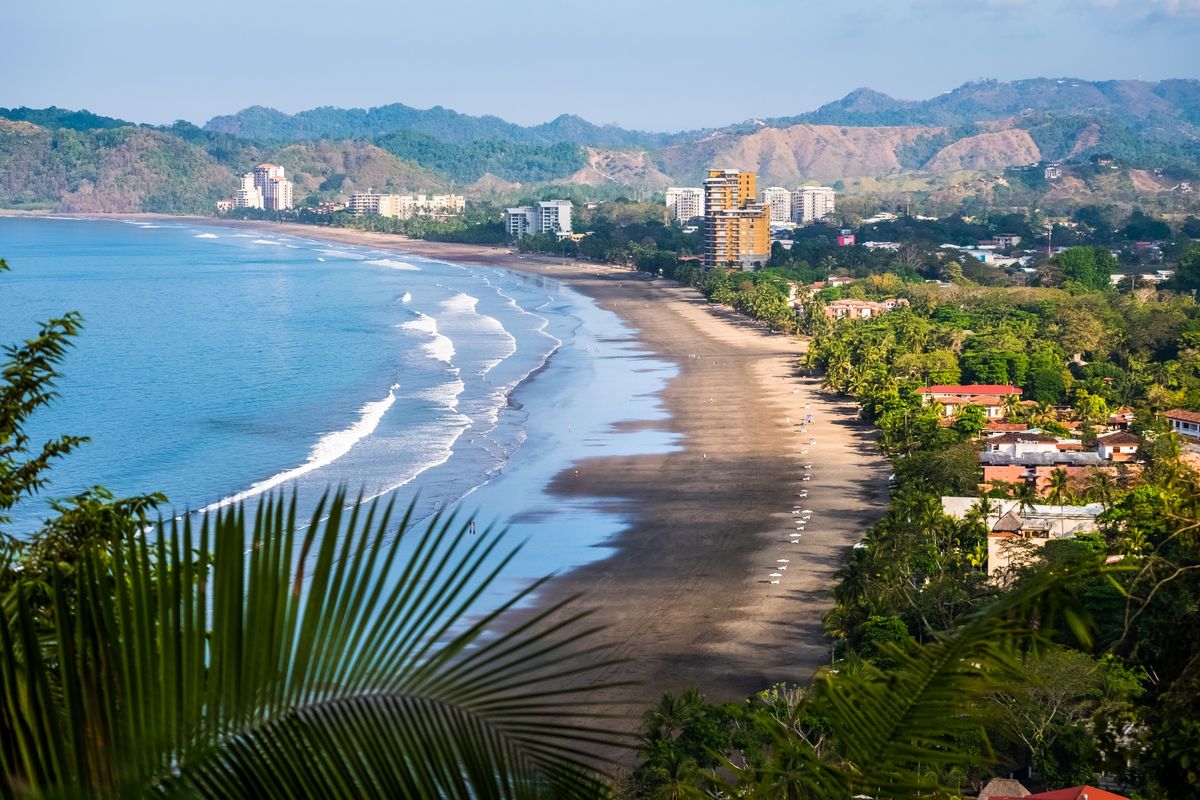
The Central Pacific is the beach you can live at without giving up the city: Jacó is about an hour and a half from San José’s airport and private hospitals, and Manuel Antonio about an hour beyond it. It suits people who want surf, sun and restaurants within a day trip of the capital, and who don’t mind heat, humidity and tourists.
The Central Pacific at a glance
| Climate | Hot and humid. Days around 85 to 92°F (29 to 33°C), nights in the mid-70s°F (23 to 25°C). Dry from about December to April; heavy afternoon rain from May to November, wetter toward Manuel Antonio |
| Elevation | Sea level in the towns; hillside homes up to roughly 1,000 feet (300 meters) |
| Nearest international airport | Juan Santamaría (SJO), near San José: about 1.5 hours from Jacó, 2.5 to 3 hours from Manuel Antonio |
| Hospital access | A public hospital in Quepos and one in Puntarenas; Caja and private clinics in Jacó; major care in San José |
| Typical rent (estimate) | $800 to $2,200 a month for one or two bedrooms |
| Foreign community | Sizeable and mixed: retirees, surfers, remote workers and business owners, alongside weekend visitors from San José |
| Spanish | English is common in tourism. Everyday errands, the Caja and offices run in Spanish |
Who the Central Pacific suits, and who it doesn’t
| It fits if you want | Look elsewhere if you want |
|---|---|
| A beach town within reach of San José | Cool or dry weather |
| Condos you can lock and leave | A quiet town without tourists |
| Surfing, sport fishing and a national park nearby | The largest foreign communities and international schools |
| Buses to the capital and no need for four-wheel drive | The lowest prices |
Jacó, Herradura, Esterillos, Quepos and Manuel Antonio: how the towns differ
| Town | What it is like |
|---|---|
| Jacó | The largest town: a long beach, condo towers, supermarkets, banks, restaurants and nightlife. Busy on weekends, when San José comes to the beach |
| Herradura | Just north of Jacó, on a sheltered bay with a marina, a golf resort and higher-priced homes |
| Playa Hermosa and Esterillos | Surf beaches and small communities south of Jacó. Quiet, with few services |
| Parrita | A farming town among palm plantations, halfway to Quepos. Low-lying and prone to flooding |
| Quepos | A working port town with a marina, the area’s public hospital, banks and shops |
| Manuel Antonio | A forested hill between Quepos and the national park, lined with hotels, restaurants and homes with ocean views. Greener and wetter than Jacó, with monkeys and sloths in the trees |
Cost of living, rent and real estate in Jacó and Manuel Antonio
Costs sit between the Central Valley and Guanacaste. Air conditioning is the swing item on the coast, adding roughly $100 to $250 a month to an electric bill as an estimate. See the cost of living in Costa Rica.
Estimated monthly rent for a one- or two-bedroom home on a long-term lease:
| Town | Monthly rent (estimate) |
|---|---|
| Manuel Antonio | $1,000 to $2,200 |
| Herradura | $1,200 to $2,500 |
| Jacó | $800 to $1,800 |
| Quepos town and Parrita | $500 to $1,100 |
Vacation rentals compete with long-term leases from December to April, so expect to search in person. See renting in Costa Rica.
Jacó real estate is mostly condominiums, from older low-rise buildings to beachfront towers, plus houses in the hills behind town. Ask about monthly fees, the building’s reserve fund and how salt air has treated it. Around Manuel Antonio and Quepos, real estate is more often a hillside house with a view, where slope, drainage and road access matter. Near any beach, check whether the land is titled or held under a maritime zone concession. See buying property in Costa Rica and real estate agents in Costa Rica.
Healthcare
- Public (the Caja). Jacó and Parrita have Caja clinics, Quepos has a public hospital, and the larger regional public hospital is in the city of Puntarenas, roughly an hour or more north of Jacó.
- Private. Jacó and Quepos have private doctors, dentists, labs and small clinics. For a private hospital, residents drive to the San José area: about an hour and a half from Jacó when Route 27 is clear, and two and a half to three hours from Manuel Antonio.
That is the shortest trip to major care from any Costa Rican beach area. See healthcare in Costa Rica.
Getting there and getting around
- From San José. Route 27, the toll highway, to the coast, then Route 34, the paved coastal highway, south through Jacó, Parrita and Quepos. Jacó to Quepos is about 40 miles (65 km), roughly an hour.
- Traffic. Route 27 backs up on Friday evenings toward the coast and Sunday afternoons toward San José, and landslides occasionally close it in the rainy season.
- By air. Quepos has a small airfield with domestic flights; check current schedules.
- Without a car. Direct buses run from San José to Jacó and to Quepos, and a local bus links Quepos with Manuel Antonio all day. Central Jacó is walkable.
- Four-wheel drive. Not needed for the main towns. Useful for steep hillside roads and for the unpaved back roads inland.
See driving and owning a car in Costa Rica.
Safety in Jacó, Quepos and Manuel Antonio
Petty theft is the main issue, especially from parked cars and on the beach. Jacó has a long-standing party reputation, and the drug and sex trade around its bars at night brings more crime than the quieter towns have. Residential areas are calmer. Strong rip currents are a real danger at Jacó and Playa Hermosa. See is Costa Rica safe to live in.
The downsides, stated plainly
- Heat and humidity all year, with little relief at night.
- Rain. September and October bring heavy downpours, flooded low roads and, around Parrita and Quepos, occasional serious flooding.
- Humidity damage. Mold, rust and short-lived electronics and appliances.
- Bugs and wildlife. Mosquitoes and, at Manuel Antonio, monkeys and raccoons that raid kitchens.
- Tourists. High season and weekends crowd the roads, beaches and restaurants.
- Prices. Restaurants and groceries in the tourist strips cost close to US prices.
- Schools. Fewer international school choices than in the Central Valley or Guanacaste.
How people usually start
- Visit in September or October to see the rain, and on a holiday weekend to see the crowds.
- Rent for six to twelve months before buying, ideally trying both Jacó and Manuel Antonio.
- Check which residency category fits your income.
- A relocation planner can help you settle in.
Neighboring regions: the Central Valley is an hour or so inland, and Uvita, Dominical and Ojochal are 45 minutes to an hour and a half south of Quepos. For a drier coast, see Guanacaste, or compare everything in the best places to live in Costa Rica.
Common questions
Is Jacó, Costa Rica a good place to live?
Jacó suits people who want a beach town with condos, restaurants and surf about an hour and a half from San José's airport and hospitals. It is hot and humid, busy on weekends and holidays, and has a party scene in the center. People who want quiet usually look at Playa Hermosa, Esterillos or Manuel Antonio.
Is Jacó, Costa Rica safe?
Jacó is safe enough for daily life in its residential areas, but it has more petty theft and nightlife-related crime than quieter beach towns. The center at night has a drug and sex trade that residents learn to avoid. Rip currents on Jacó beach and nearby Playa Hermosa are a serious risk.
What is the difference between Jacó and Manuel Antonio?
Jacó is a flat, built-up beach town with condo towers and nightlife, about an hour and a half from San José. Manuel Antonio is a steep, forested hill between the town of Quepos and a national park, about an hour further south. Manuel Antonio is greener, wetter and usually more expensive to rent in.
How far are Jacó and Manuel Antonio from San José?
Jacó is about 60 miles (100 km) from San José's airport, roughly an hour and a half by Route 27 and the coastal highway. Manuel Antonio and Quepos are about 105 miles (170 km) away, usually two and a half to three hours. Sunday afternoon and holiday traffic can add an hour or more.
Sources
This page is general information, not professional advice. Rules and amounts change, and officials apply them differently. Confirm the details with the relevant authority or a qualified professional before you act on them.