Driving in Costa Rica as a resident: licenses, buying a car and the marchamo
Get on the road legally and safely: your license, buying and registering a car, and what it costs to keep one each year.
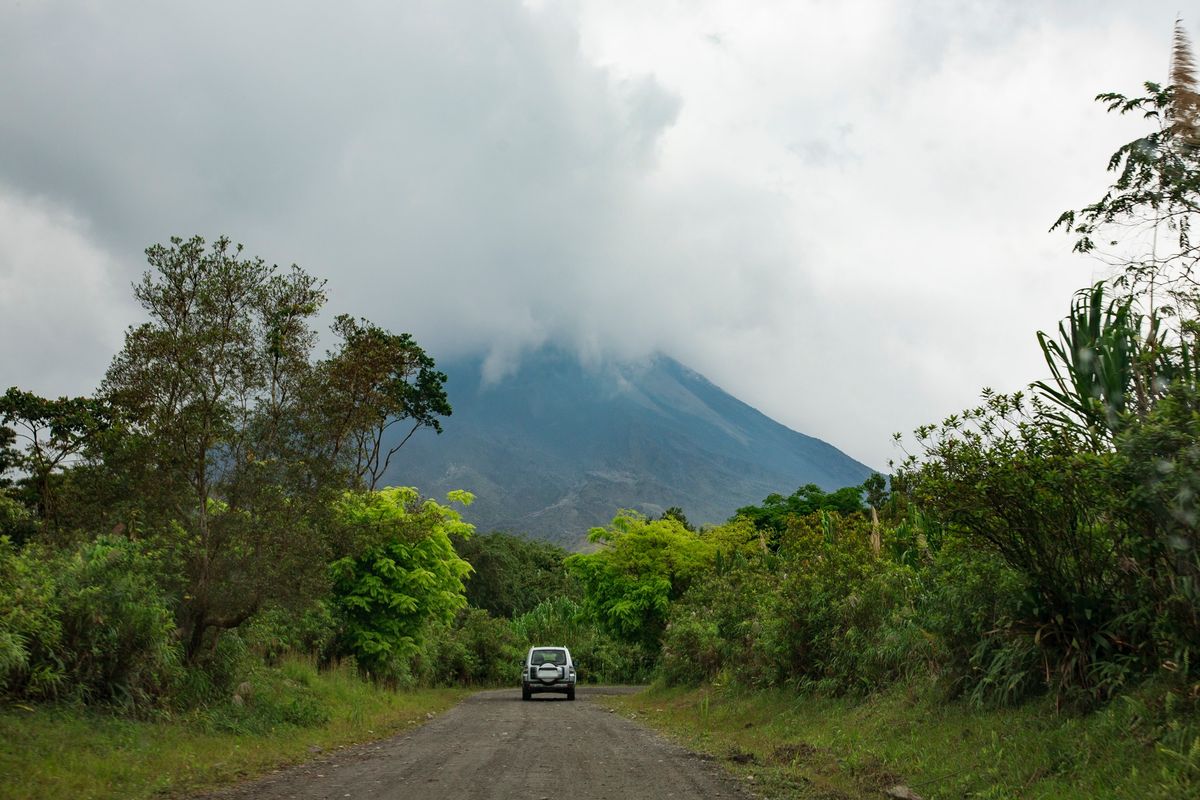
You can drive in Costa Rica on a US license for as long as your tourist stay is valid, and once you are a resident you exchange it for a Costa Rican license without retaking the driving test. Owning a car means three recurring things: the annual marchamo, a technical inspection, and insurance beyond the legal minimum.
The essentials
| What to know | |
|---|---|
| US license | Valid while your tourist stay is valid. Carry your passport with the entry stamp |
| Costa Rican license | Exchanged for your US license once you hold a resident card (DIMEX); medical exam, no road test in most cases |
| Marchamo | Annual registration payment, due in November and December |
| Technical inspection | Periodic, yearly for most cars; the month depends on the last digit of the plate |
| Insurance | Basic injury coverage is included in the marchamo; damage and theft coverage is separate and optional |
| Buying a car | Transfer is done by a notary and recorded in the National Registry |
| Import taxes | Roughly 50 to 80 percent of the government’s valuation, depending on the car’s age |
| Speed limits | Posted in kilometers per hour; many roads are 60 km/h (37 mph) or less |
Rules and fees change. The Road Safety Council (COSEVI) and the transport ministry publish the current ones, in Spanish.
Your license
As a visitor. A valid US license is accepted for the length of your permitted stay. That allowance used to be capped at 90 days and has since been tied to the stay stamped in your passport, so check the current rule if you plan to drive for many months. An international driving permit isn’t required.
With a residency application pending. Your US license covers you only while your tourist days last. Ask your attorney how to stay legal behind the wheel in the months before your card arrives, because the answer has changed over time.
As a resident. Once you have your DIMEX, you exchange (homologar) your US license at a COSEVI licensing office:
- Book an appointment.
- Get the medical exam for drivers from a registered doctor, a short check that costs roughly $30 to $50 as an estimate.
- Bring your DIMEX, passport, valid US license and copies.
- Pay the fee and have your photo taken.
If your US license has expired, you take the theory and road tests like a new driver, so renew it before you move. Holders of the digital nomad visa can drive on their home license for the length of the visa.
Buying a car
Cars cost much more than in the US, new or used, because of import taxes, and they hold their value. As a rough guide, expect to pay thousands of dollars more for a used SUV than the same vehicle would cost at home.
- Where to look. Dealers, online classifieds and word of mouth in expat communities. Common Japanese and Korean models are the easiest to maintain because every town has parts and mechanics for them.
- What to check. Have an independent mechanic inspect it. Ask a notary or attorney to check the National Registry for liens, unpaid fines attached to the plate, and that the seller is the registered owner. Confirm the marchamo and inspection are current.
- The transfer. A notary prepares the transfer deed and records it. The buyer normally pays a transfer tax of 2.5 percent of the vehicle’s value plus registry stamps and the notary’s fee.
- Clearance. Many homes in the hills and at the beach need high clearance, and some need four-wheel drive in the rainy season. Decide where you will live before you choose the car.
You don’t need residency to own a car. A passport is enough to register one in your name.
Importing a car
Import taxes are based on the Ministry of Finance’s own valuation of the vehicle, not what you paid, and the rate rises with age: roughly half of that value for a car up to three years old and close to 80 percent for one older than five. Electric vehicles have had exemptions. Add shipping, port fees, the inspection and registration.
Get the tax calculated for your exact vehicle before you ship it. See shipping a household or a car to Costa Rica for how the shipment works and whether a new resident’s exemption applies.
Yearly costs of owning a car
- Marchamo. Paid between November 1 and December 31 at banks and online. It includes a tax based on the vehicle’s assessed value, the mandatory insurance, and smaller charges. For an older, modest car it may be $150 to $400; for a newer or high-value SUV it can pass $1,000. These are estimates.
- Technical inspection. The inspection (still widely called Riteve, after the former operator) checks brakes, lights, emissions and tires. The month is set by the last digit of your plate. Newer cars are inspected less often.
- Insurance. The mandatory coverage pays for injuries up to a low limit and nothing for vehicles or property. Most residents add a voluntary policy for liability, collision and theft.
- Fuel. Sold by the liter at prices set nationally, the same at every station, and higher than typical US prices. Attendants pump it.
- Maintenance. Rough roads and humidity wear out suspension, tires and brakes faster than you are used to.
For how a car fits into the monthly budget, see the cost of living in Costa Rica.
Rules that differ from the US
- Speed limits are in kilometers per hour. Highways are mostly 80 to 100 km/h (50 to 62 mph), secondary roads 60 km/h (37 mph) unless posted, and school zones 25 km/h (15 mph).
- San José restricts cars by plate number. On weekdays, vehicles are barred from the city center on one day a week according to the last digit of the plate.
- Fines are high for speeding, phone use, missing seat belts and child seats.
- The alcohol limit is lower than in most US states, and drunk driving can be a criminal offense.
- After a crash, call 911. Traditionally vehicles stay where they stopped until the traffic police and the insurer’s inspector arrive. Ask your insurer what applies to minor collisions now.
- Carry your license, passport or DIMEX, and the car’s registration, marchamo and inspection papers. A reflective vest, warning triangles and a fire extinguisher are required equipment.
Staying safe on the road
- A 60-mile (100 km) trip can take two to three hours. Plan by time, not distance.
- Avoid driving at night outside towns. Roads are unlit and people walk and cycle on them.
- Expect one-lane bridges, potholes, landslides in the rainy season, and trucks on mountain roads.
- Don’t cross a river you haven’t seen someone else cross.
- Leave nothing visible in a parked car. See is Costa Rica safe to live in.
Living without a car
In the Central Valley, buses are frequent and cheap, and taxis and ride-hailing are easy to find, so many residents manage without a car. In most beach and hill areas you will want one. The best places to live in Costa Rica compares the regions, and a relocation planner can help with the license exchange and a purchase.
Common questions
Can I drive in Costa Rica with a US license?
Yes. Visitors can drive in Costa Rica on a valid US license for as long as their tourist stay is valid, carrying the passport that shows the entry stamp. Residents are expected to exchange the US license for a Costa Rican one, which requires a resident card (DIMEX) and a medical exam, and normally no driving test.
Is it safe to drive in Costa Rica?
Driving in Costa Rica is manageable with care, but it is one of the larger everyday risks of living there. Roads are narrow and often unlit, with few shoulders and many pedestrians, cyclists and motorcycles. Most residents avoid driving at night outside towns and allow much more time than the distance suggests.
What is the marchamo in Costa Rica?
The marchamo is Costa Rica's annual vehicle registration payment. It is paid in November and December for the following year and bundles a tax based on the vehicle's value with the mandatory injury insurance and several smaller charges. A car without a current marchamo can be fined and taken off the road.
Is it better to buy a car in Costa Rica or import one?
For most people, buying a car in Costa Rica is simpler than importing one. Import taxes are charged on the government's valuation of the vehicle and rise with its age, to well over half of that value. Cars bought locally are expensive for the same reason, but the paperwork is done and parts are available.
Sources
This page is general information, not professional advice. Rules and amounts change, and officials apply them differently. Confirm the details with the relevant authority or a qualified professional before you act on them.