Living on Costa Rica's Caribbean coast: Puerto Viejo and Cahuita
Afro-Caribbean culture, jungle to the water's edge and a slower, more independent way of life than the Pacific side.
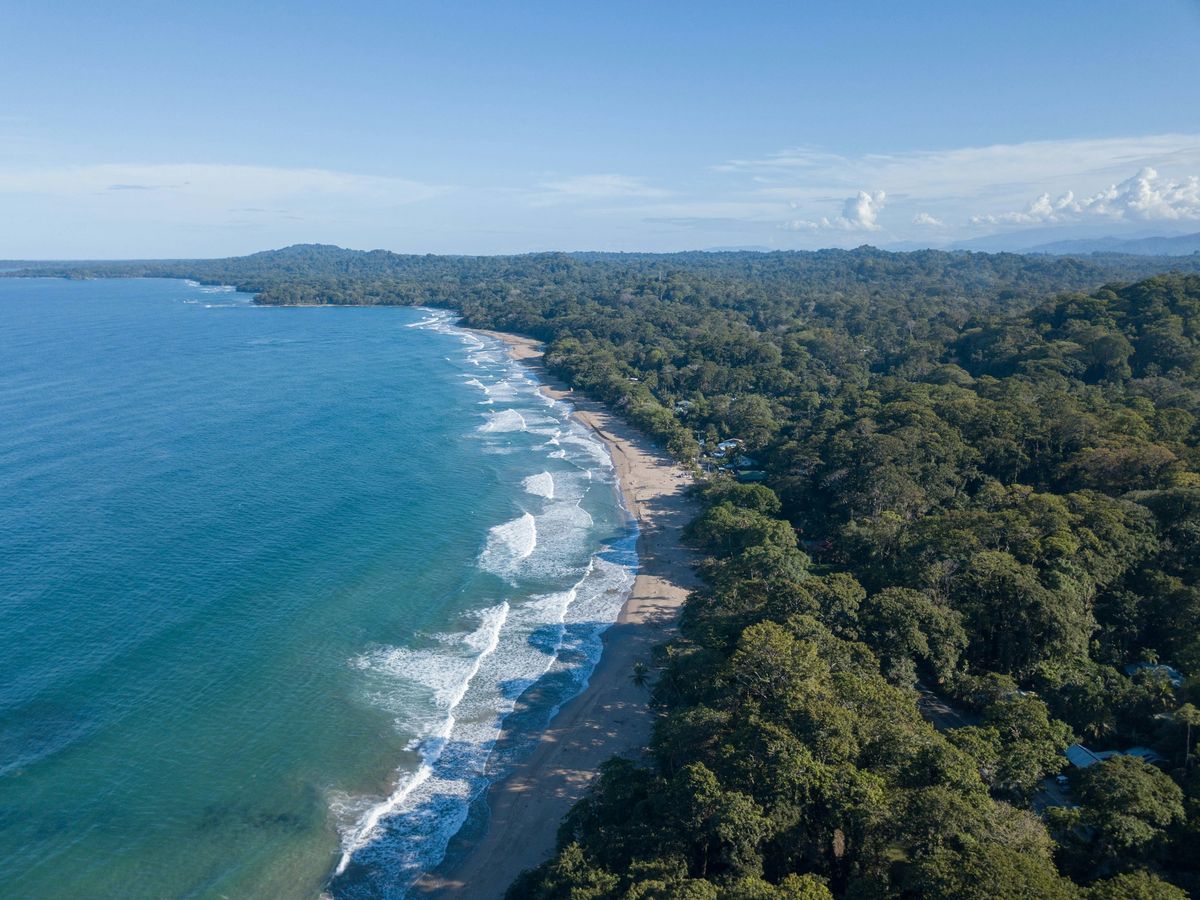
Costa Rica’s southern Caribbean coast offers a slower, more colorful life than the Pacific side: Afro-Caribbean food and music, jungle that reaches the sand, and a community where bicycles outnumber cars. It suits independent people who value culture and nature over convenience, and it asks for patience with rain, humidity and distance.
The Caribbean coast at a glance
| Climate | Hot and humid all year. Days in the mid-80s°F (28 to 31°C), nights in the 70s°F (22 to 24°C). Rain in every month, with no true dry season; September and October are often the sunniest |
| Elevation | Sea level; a few homes in the low hills behind the coast |
| Nearest international airport | Juan Santamaría (SJO), near San José, about 4 to 5 hours by road |
| Hospital access | Caja clinics locally; the public hospital is in the city of Limón, about an hour north; private hospitals are in San José |
| Typical rent (estimate) | $700 to $1,500 a month for one or two bedrooms |
| Foreign community | Small and mixed, with many Europeans as well as North Americans: business owners, artists, remote workers and some retirees |
| Spanish | Needed for offices and clinics. English and an English-based Creole are widely spoken alongside Spanish |
Who the Caribbean coast suits, and who it doesn’t
| It fits if you want | Look elsewhere if you want |
|---|---|
| A distinct culture and a small, informal community | Hospitals and specialists nearby |
| Reef, jungle and wildlife outside the door | A dry season you can count on |
| Life by bicycle | Gated communities and resort amenities |
| Lower rents than the Pacific beach towns | Straightforward, titled real estate |
Puerto Viejo, Cahuita and the beaches to Manzanillo: how the towns differ
| Place | What it is like |
|---|---|
| Puerto Viejo de Talamanca | The hub: a small, lively town with restaurants, bars, shops, a bank and surf. Noisy in the center at night |
| Playa Cocles, Playa Chiquita and Punta Uva | Beaches strung along the 8-mile (13 km) road south of Puerto Viejo. Most foreign residents live here, in houses set back in the jungle |
| Manzanillo | A quiet fishing village at the end of the road, inside a wildlife refuge |
| Cahuita | A smaller, calmer village about 10 miles (16 km) north of Puerto Viejo, beside Cahuita National Park. Fewer services and lower prices |
| Limón | The provincial capital and port, about an hour north. Hospital, government offices and shopping; not where foreigners settle |
Cost of living, rent and real estate in Puerto Viejo and Cahuita
Rent is lower than on the Pacific coast, and many people live without a car or air conditioning. Groceries and restaurant meals in Puerto Viejo cost more than in the Central Valley. As an estimate, a couple living comfortably spends $2,300 to $3,500 a month. See the cost of living in Costa Rica.
Estimated monthly rent for a one- or two-bedroom home on a long-term lease:
| Place | Monthly rent (estimate) |
|---|---|
| Cocles, Playa Chiquita and Punta Uva | $900 to $1,800 |
| Puerto Viejo town | $700 to $1,500 |
| Cahuita and inland villages | $500 to $1,100 |
Puerto Viejo real estate needs more care than property almost anywhere else in Costa Rica. Much of the coastal land lies in the maritime zone, inside the Gandoca-Manzanillo wildlife refuge, or within Indigenous territories, where land can’t be sold to outsiders. Some property is held by possession without registered title. Have an independent attorney confirm exactly what is being sold before you pay a deposit. See buying property in Costa Rica and real estate agents in Costa Rica.
Healthcare
- Public (the Caja). Local clinics serve the Cahuita and Puerto Viejo area. The public hospital for the province is in Limón, about an hour away.
- Private. A few private doctors, dentists and pharmacies work in Puerto Viejo. There is no large private hospital on this coast, so specialist and planned care means San José, four to five hours away.
For anyone with a condition that needs regular monitoring, this is the main argument against the Caribbean. See healthcare in Costa Rica.
Getting there and getting around
- From San José. Route 32 over the mountains through Braulio Carrillo National Park to Limón, then Route 36 south along the coast. About 135 miles (215 km), usually four to five hours.
- Closures. Landslides and fog close the mountain section of Route 32 several times a year, sometimes for a day or more. Roadworks on the lowland section have caused long delays. The detour through Turrialba adds hours.
- By air. Limón has a small airport that has had domestic flights at times; check whether any are running.
- Locally. The coast road is paved and flat, and bicycles are the usual transport between Puerto Viejo and Manzanillo. Direct buses run to San José.
- Four-wheel drive. Not needed for the main road. Side roads are muddy tracks, and high clearance helps.
See driving and owning a car in Costa Rica.
Is Puerto Viejo safe? Safety on the Caribbean coast
The beach towns feel relaxed, and most residents get by with sensible precautions. Theft is the everyday problem: bags, bicycles, phones and break-ins. Avoid walking or cycling the beach road or the beach after dark. Limón province has one of the highest rates of violent crime in Costa Rica, mostly linked to drug trafficking and concentrated around the port city. Read the current US travel advisory and see is Costa Rica safe to live in.
The downsides, stated plainly
- Rain. It can rain hard in any month, and December and July are often very wet. Flooding cuts roads some years.
- Humidity. Mold, rust and rot are constant. Electronics and vehicles age quickly.
- Bugs. Mosquitoes and sand flies, and dengue occurs.
- Distance. A long, unreliable road to the capital, the airport and the hospitals.
- Services. Fewer banks, shops and tradespeople; power and internet outages in storms.
- Property risk. Title problems are more common here than elsewhere.
- Noise. Music carries at night in and near the town center.
How people usually start
- Visit for several weeks, including a wet month, before deciding anything.
- Rent for at least a year. Many long-term residents never buy.
- Check which residency category fits your income.
- A relocation planner can help with the practical steps.
Neighboring regions: the road to San José leads to the Central Valley, and Arenal and the northern lowlands lie to the northwest. For rainforest on the Pacific side, see Uvita, Dominical and Ojochal, or compare everything in the best places to live in Costa Rica.
Common questions
Is the Caribbean side of Costa Rica a good place to live?
The Caribbean side of Costa Rica suits independent people who want a relaxed, multicultural beach community and don't need city services. It has rain in every month, high humidity and limited healthcare, and it is four to five hours from San José. Buying property there needs more legal care than elsewhere in the country.
Is Puerto Viejo, Costa Rica safe?
Puerto Viejo is relaxed by day, and most residents live there without serious trouble. Theft is common, including bag snatching and break-ins, and robberies have happened on dark stretches of the beach road at night. Limón province as a whole has one of the country's highest rates of violent crime, mostly in and around the port city of Limón.
What is the difference between Puerto Viejo and Cahuita?
Puerto Viejo is the larger and livelier town, with most of the restaurants, bars and foreign residents, and a string of beaches to the south. Cahuita is a smaller, quieter village beside a national park, about 10 miles (16 km) to the north.
How much does it cost to rent in Puerto Viejo?
As an estimate, a one- or two-bedroom long-term rental in the Puerto Viejo area runs about $700 to $1,500 a month. Houses close to the beaches at Cocles, Playa Chiquita and Punta Uva cost more, and simple houses in Cahuita or inland cost less.
Sources
This page is general information, not professional advice. Rules and amounts change, and officials apply them differently. Confirm the details with the relevant authority or a qualified professional before you act on them.