Living in Grecia, Costa Rica: weather, costs and what the town is like
A Central Valley farming town, a little higher and cooler than Atenas, with its own public hospital and a quiet foreign community in the hills.
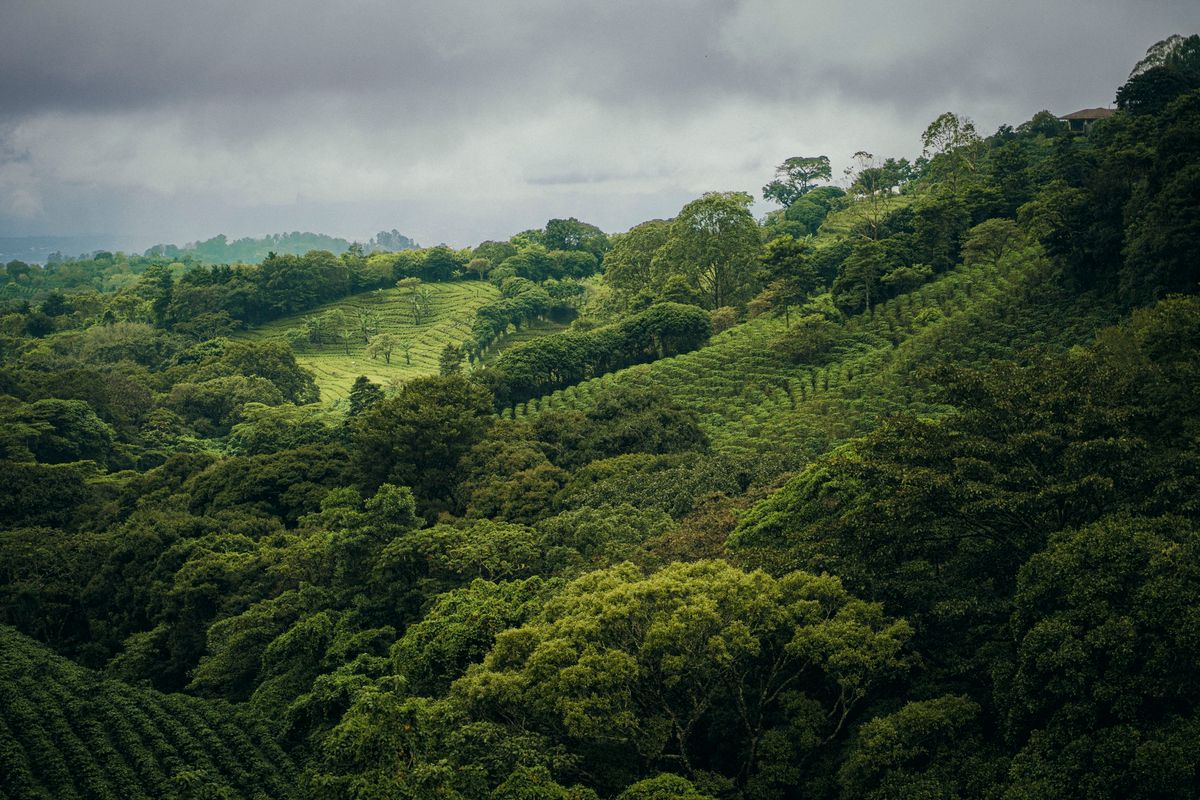
Grecia is a farming town on the western side of Costa Rica’s Central Valley, a little higher and cooler than Atenas, with its own public hospital and a quiet community of American and Canadian residents in the surrounding hills. The airport is usually 30 to 45 minutes away, and prices are below the San José suburbs.
Grecia at a glance
| Where | Alajuela province, roughly 30 miles (about 50 km) northwest of San José |
| Elevation | About 3,300 feet (1,000 meters) in town; lower toward the south of the canton and much higher on the slopes toward Poás volcano |
| Weather | Days in the mid-70s to low 80s°F (24 to 28°C), nights in the 60s°F (16 to 20°C); cooler uphill |
| To the airport (SJO) | About 30 to 45 minutes |
| To San José | About an hour |
| To the beach (Jacó area) | About 1.5 to 2 hours |
| Hospital | A public Caja hospital in Grecia; private hospitals in Escazú and San José, roughly 45 to 75 minutes |
| Long-term rent (estimate) | $600 to $1,300 a month for one or two bedrooms |
| Suits | Retirees and remote workers who want a Costa Rican town with a hospital close by |
Distances and drive times are rough and depend on traffic.
The weather
Elevation sets the temperature in Grecia, and the canton covers a wide range of it. The town center is spring-like: warm afternoons, cool evenings, and no need for heating or, in most homes, air conditioning.
- In and around town. Mild all year. Fans are usually enough.
- Higher up, toward Poás. Noticeably cooler, greener and mistier, with more wind and cloud. Some people love it; others find it damp in the rainy season.
- Lower areas in the south of the canton. A little warmer, closer to Atenas in feel.
The dry season runs from about December to April, with wind early in the year. The rainy season, from about May to November, usually brings clear mornings and afternoon rain, heaviest in September and October. If temperature matters to you, check the elevation of the specific house.
What the town is like
Grecia is a busy agricultural town, surrounded by coffee and sugar cane. The center is built around a park and the town’s red metal church, its best-known landmark. There is a farmers market, supermarkets, banks, hardware stores, pharmacies, cafés and a growing number of restaurants.
The foreign community is smaller and more spread out than in Atenas or Escazú. Most foreign residents are retirees, living in the hills around town. There are social groups and English-speaking events, but daily life runs in Spanish, and some Spanish makes a big difference with landlords, builders and the municipality.
Sarchí, the craft town known for its painted oxcarts, is next door, and Poás volcano national park is within about an hour’s drive.
Where people live and what homes cost
Most foreigners live outside the center, in the districts and hill communities around the town, often on a ridge with a valley view. Ask about each area’s elevation, road and water supply, because these vary a lot within a few miles.
- Renting. About $600 to $1,300 a month for a one- or two-bedroom home, more for a larger house with a view and a pool. See renting in Costa Rica.
- Buying. Grecia real estate is mostly houses on their own lots, plus land and some small gated developments. As an estimate, simple Costa Rican-style houses can be found under $200,000, and larger view homes commonly run from about $250,000 to $500,000 or more. The same house is often listed with several agents at different prices, so ask for recent sale prices.
These figures are estimates for early planning. Agents in Costa Rica aren’t licensed by the state, so read real estate agents in Costa Rica and buying property in Costa Rica as an American before you make an offer on any of the Grecia homes for sale you see online.
Healthcare
Grecia’s main advantage over many smaller towns is its public hospital, run by the Caja, which serves the town and nearby cantons. Residents enrolled in the Caja are assigned to a local clinic (EBAIS) and referred from there. There are private doctors, dentists, labs and pharmacies in town.
The large private hospitals are in Escazú and San José, usually 45 to 75 minutes away, and longer at rush hour. See how healthcare in Costa Rica works.
Getting around
- By car. Route 1, the highway from San José past the airport, is the quick way to the city and the airport. Roads up into the hills are narrow, steep and winding.
- By bus. Regular buses run to Alajuela, San José and neighboring towns.
- In town. The center is walkable. For a home in the hills, plan on a car. See driving and owning a car in Costa Rica.
Things to check before you commit
- Water. Supply in parts of the canton comes from the municipality, in others from a local community water association (ASADA). Before buying land or a home, confirm the source and get the water availability letter in writing.
- Elevation and mist. Visit the specific house in the rainy season. A view lot high on the slope can sit in cloud for days.
- The road to the house. Drive it in October, or ask someone who has.
- Schools. Grecia has public and small private schools. The larger international schools are in the western suburbs of San José, a long daily drive. See schools in Costa Rica.
- Internet. Fiber reaches much of the town; confirm it for a hillside address.
- Security. Grecia is generally calm, and burglary of empty houses is the main concern. See is Costa Rica safe to live in.
Grecia compared with nearby towns
| Town | How it differs from Grecia |
|---|---|
| Atenas | Lower and warmer, with a larger, longer-established retiree community; similar prices; no hospital of its own |
| San Ramón | Further west, cooler and cloudier, usually a little cheaper, with its own public hospital |
| Escazú and Santa Ana | Suburbs of San José with private hospitals, malls and international schools; higher prices and heavy traffic |
| Alajuela | A city next to the airport; busier and less of a retiree destination |
For how the whole region compares, see living in the Central Valley and the best places to live in Costa Rica. Rent in Grecia for a few months, including part of the rainy season, before you buy.
Common questions
Is Grecia, Costa Rica a good place to live?
Grecia suits people who want a working Costa Rican town with spring-like weather, a public hospital in town, lower prices than the San José suburbs and an airport about 30 to 45 minutes away. It is less suited to people who want nightlife, a large English-speaking scene, international schools nearby or life without a car in the hills.
What is the weather like in Grecia, Costa Rica?
Grecia is mild all year. In town, days are typically in the mid-70s to low 80s Fahrenheit (about 24 to 28°C) and nights in the 60s (about 16 to 20°C). Homes higher on the slopes toward Poás volcano are cooler and mistier. The dry season runs from about December to April and the rainy season from May to November.
How much does it cost to rent in Grecia?
As an estimate, a one- or two-bedroom long-term rental in Grecia runs about $600 to $1,300 a month. Houses with views or a pool cost more, and homes rented mainly to Costa Ricans cost less. Check current listings before relying on these figures.
How far is Grecia from the airport and San José?
Grecia is roughly 30 miles (about 50 km) northwest of San José. The main international airport (SJO) in Alajuela is usually 30 to 45 minutes away by Route 1, and San José about an hour. The Pacific beaches around Jacó are roughly an hour and a half to two hours. Traffic can lengthen all of these.
Grecia or Atenas: which is better?
Atenas is lower and warmer, with a larger and longer-established retiree community. Grecia is a little higher and cooler, a bigger town with its own public hospital, and generally a bit less focused on foreigners. Prices are similar. Many people visit both in the same week before deciding.
Sources
This page is general information, not professional advice. Rules and amounts change, and officials apply them differently. Confirm the details with the relevant authority or a qualified professional before you act on them.